
Both start and end of life are critical to asset reliability and value. This is why two new goals feature in this priority. One aims to speed up and derisk the introduction of assets, and the other aims to help tackle growing and changing obsolescence challenges.
"The RTS sets out a plan for development and application of technology solutions that will help the thousands of passionate and dedicated people across our industry deliver a resilient railway, fit for the future, that exceeds the expectations of our customers."
Martin Jones, Chief Engineer, Network Rail
"There are plenty of technologies that we can exploit to unlock more efficient and reliable service for our customers. The challenge is to pursue and deploy them with ingenuity to harness real value now and in the future. The RTS is essential to drive and help coordinate the efforts required from across the industry."
Clive Burrows, Group Engineering Director, FirstGroup plcCase studies help the railway to celebrate and publicise its achievements and learn lessons in introducing new solutions. Explore the stories below and share yours at rts@rssb.co.uk.
Many research and innovation activities support progress towards the goals set out for this priority. Visibility of these is essential to enable greater collaboration and increase the likelihood of success. This is why the RTS puts a spotlight on a selection of these activities, enables you to download the full list of activities of which we are aware, and invites you to add to this picture by sharing your own work.
An RSSB co-funded project is developing a ready-for-line-test trailing arm bush device that could reduce damage to rails and wheelsets and significantly reduce whole system costs.
Network Rail has been working on a mapping tool that enables asset vulnerability heat maps for use in risk assessment and quantification and investment prioritisation.
Learning from past project to identify opportunities to improve successful deployment while decreasing the time and efforts put into testing, including the use of digital twins in testing.
Network Rail programme providing an effective workflow management system for drainage assets, linking existing and new systems for decision support tools and models to allow for more informed decision making.
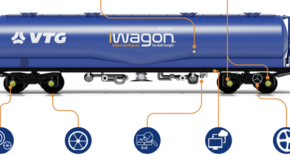
European project, involving Network Rail and UK universities, that delivered a design for the freight vehicle of the future with reduced energy consumption and track damage. Included a combined wheel-slide and brake control system, allowing for speeds up to 140 km/h.
SET, University of Huddersfield and RSSB project demonstrating the feasibility of independent, actively controlled in-wheel traction motors for optimised steering, guidance, traction and braking giving a longer-life and more cost-effective wheel/ rail interface.
Project led by Brunel University aiming to investigate the design of future passenger trains in order to apply robotic and autonomous servicing solutions.
Lucchini and Unipart Rail project aiming to develop a remanufacturing cell for rail wheels, including in-process and post-production inspection to ensure accuracy and integrity of the wheels.
Network Rail R&D programme aligned with the Rail Sector Deal, looking at addressing the sustainability of future signalling systems on the GB network. It aims to provide the capability to enable safe, affordable and deliverable signalling to meet future demands.
Network Rail project automating the collection of accurate data on all structurally significant defects on tunnel lining. Aiming to replace detailed tunnel examinations on primary routes and investigate sub-system inspection options.
Fugro, in collaboration with Network Rail, are using an innovative, cost-effective and safe survey methodology for maintaining positional track geometry (adjusting both rails to the required optimum alignment) even for non high-speed rail lines.
The ATLAS (Automated Track & Lineside Asset Survey) platform will be used to create an end-to-end automated pipeline for infrastructure asset identification, classification and inspection to be integrated into Network Rail’s asset database.
Help keep the industry up to date with progress by sharing your research and innovation activities that are relevant to this priority.