ACADEMIC CAPABILITIES

University of Southampton

School of Engineering, Faculty of Engineering and Physical Sciences


Overview

Russell Group university ranked 4th equal in the UK for research power, with more than 1,000 undergrad and postgrad taught students each year in engineering, and outstanding national facilities. Lead the UKRRIN Centre of Excellence for Infrastructure, and the UK Collaboratorium for Research on Infrastructure and Cities.

UKRRIN status

UKRRIN Member

Centre of Excellence in Infrastructure (CEI) Lead

Member of the Centre of Excellence in Rail Economics Policy and Operations (CEREPO)

School of Engineering, Faculty of Engineering and Physical Sciences - Test facilities

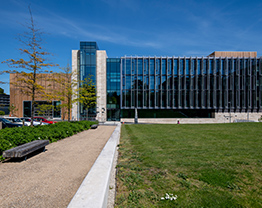
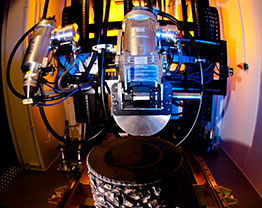
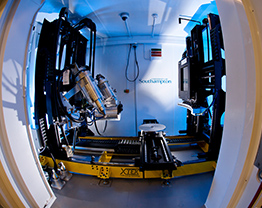
National Infrastructure Laboratory - large structures testing lab, geomechanics lab, geotechnical centrifuge and energy lab/ Human Factors - range of simulators/ Anechoic and reverberant chambers/ Full scale rail test track for acoustics research/ 138m towing tank, flumes and deep underwater acoustic tank/ Very large high energy computed tomography/ Range of wind tunnels including anechoic/ High voltage laboratories/ Testing and Structures Research Laboratory/ Design and prototyping workshops including 3D printing/ IRIDIS4 and other supercomputing facilities/ Equipment and expertise in rail infrastructure field measurements and analysis/

Research themes

Topic: Railway noise and vibration
Summary:

We investigate the fundamental mechanisms behind the generation of noise and vibration and  use this understanding to develop practical solutions. We have developed the TWINS program, the state-of-the-art method of predicting rolling noisem and a simplified model in the STARDAMP project to assess the benefits of different wheel and rail damping solutions. The Acoutrain project aims to replace measurements by simulation in the approval process for new trains. We have developed dedicated prediction models for ground vibration and ground-borne noise. We are researching the use of numerical techniques and semi-empirical methods for predicting aerodynamic noise at speeds above 300km/h and are active in other areas including curve squeal, impact noise, bridge noise and roughness growth.

Project examples: MOTIV / ACOUTRAIN / A holistic approach for the design and assessment of railway tracks / Prediction of ground-borne noise and vibration in buildings
Topic: High voltage systems, dielectric materials and insulation systems
Summary:

Condition monitoring of transmission plant; on-line condition monitoring of long cable circuits (20km+); condition assessment of transformers; modelling the environmental conditions in which electrical plant is likely to operate; design of dielectric for specific properties; commercial development testing, type approval, material characterisation, forensic analysis and FEA modelling (mechanical, thermal, electrical).

Project examples: Optically based partial discharge (pd) data transmission system / Failure modes of transformers / Cable rating for circuits routed through tunnels
Topic: Aerodynamics
Summary:

Fundamental fluid dynamics, computational aeroacoustics, applied aerodynamics and flight dynamics. Excellent computational and experimental facilities. High performance workstations are supplemented by local parallel computers based on commodity processors. We lead the UK Turbulence Consortium, providing access to the largest supercomputers in the country.

We have a range of wind tunnels. The two largest have test sections measuring 3.5m by 2.6m and 2.1m by 1.7m and are equipped with rolling roads, three-axis laser doppler anemometry and motor drive systems for propeller testing. Facilities cover the full spectrum of low-speed, transonic, supersonic and hypersonic flow. A flight simulation laboratory is being used to develop cost effective simulation tools for the aerospace industry.

Project examples: Track systems for high speed railways: getting it right / Universality of fine scale turbulence / Aspects of Reduced Order Modelling in Nonlinear Systems
Topic: Human factors
Summary:

(Behavoural) Improving and optimising human performance in systems, especially with the introduction of new technology and automation. Analysing accidents and making recommendations for accident prevention in the future.

(Physical response) Community response to vibration in buildings, passenger comfort in railway vehicles, motion sickness, human responses to combined noise and vibration, subjective responses to shock. Facilities include 6-axis motion simulator, vertical vibrator, horizontal vibrator, 12m tilting and translating cabin, turntable, treadmill and electrodynamic shakers.

Project examples: Application of contemporary systems-based methods to reduce trauma at rail level crossings / Biodynamics of the seated body with vertical excitation / Multi-body biodynamic modelling
Topic: Whole life cost and carbon modelling, demand modelling and appraisal
Summary:

Integrated models for the prediction of track deterioration and maintenance planning; whole life cost and carbon modelling; capacity and demand modelling of current and future national transport infrastructure; relating capacity utilisation indices to the propagation of delays; optimising capacity at railway nodes; spatial modelling and visualisation to assess the case for investment in new rail infrastructure.

Project examples: Developing Integrated Tools To Optimise rail systems (DITTO) / Infrastructure Transitions Research Consortium / An Integrated Appraisal Tool for Local Railway Stations / Overcoming Capacity Constraints: A Simulation Integrated with Optimisation at Nodes (OCCASION)
Topic: Climate change, coastal erosion and bridge scour in rivers and estuaries
Summary:

Predicting long term coastal geomorphological evolution; coastal impacts and adaptation; mechanisms of scour in estuaries and rivers; permanent and temporary remote high accuracy monitoring of scour in real time by sonar.

Project examples: Network Rail Strategic University Partnership / integrating COAstal Sediment SysTems (iCOASST) / Lead authorship and review editor for six reports of the IPCC / Co-developed Global Climate Forum's DIVA coastal systems research model
Topic: Tribology (interacting surfaces in relative motion)
Summary:

Researching and solving next generation tribological design issues, to enable surface interactions to occur with minimal energy loss and impact on the environment; enhanced capabilities in advanced computational and experimental tribology; strategic research partnerships worldwide.

Our researchers work across a wide number of application areas, covering  topics from aerospace and automotive materials  to energy materials, surface engineering to corrosion, electrochemical engineering  to artificial hips, microsystems to 3D printing, micro dry powder dispensing to tribology, tomographic imaging to artificial intelligence.

Project examples: The Adhesion Rail Riddle - ensuring trains can brake / Forensic examination of rail axle bearings / Health monitoring of new generation aircraft bearings / A study on White Etching Crack (WEC) root causes and its relation to material microstructures and surface treatments
Topic: Geomechanics and environmental geotechnics
Summary:

Mechanisms of railway track behaviour encompassing stiffness, robustness, longevity, and noise and vibration effects; Engineering, environmental and economic performance of track; Reducing whole life costs and improving reliability for all track forms; Developing tools for reliable whole life assessment; Monitoring, strengthening and improving earthworks; Ballasted railway track at line speeds up to 400km/h; Innovative maintenance methods for wheels and rails; Low cost continuous self-monitoring and condition reporting for rail infrastructure, eg earthworks/embankments, OLE and bridges; Multifunctional materials, structures and foundations for OLE; Novel identification and assessment methods for bridge scour; Role of operational changes (eg headways) and infrastructure improvements (eg switches and crossings) in increasing capacity.

Project examples: Science & analytical tools to design long life, low noise railway systems / Track systems for high speed railways: getting it right / Railway Track for the 21st Century / A Guide to Track Stiffness

School of Engineering, Faculty of Engineering and Physical Sciences – Fact File (2026-27) 

16 Research staff
15 PhD students
85 Publications

Capability matrix

CAPABILITY
CAPABILITY LEVEL
Easy to use for all
Accurate, accessible and understandable real-time information
Smart fare collection
Accessible to all
Multi-modal integrated journeys
Reliable and fast on-board connectivity
Freight friendly
Increased network access for freight
Safer freight operations and better asset management
Enable greater intermodality and access for freight customers
Greater asset utilisation and reduced freight journey times
Low carbon freight and On Track machines
Low emissions
Efficient new electrificaiton
Zero carbon self-powered vehicles
Low carbon freight and On Track machines
Intelligent energy management
Cleaner air
Quieter railway
Lowering embodied carbon of key material
Optimised train operations
Infrastructure and train capabilities to overcome capacity constraints
Simpler and safer real-time operations and decisions
Improved recovery from incidents and disruptions
Reliable and flexible train planning
More affordable solutions for lower-use lines
Efficient and reliable - infrastructure
“Right-time” actionable insights on infrastructure conditions
Efficient, effective and safe infrastructure maintenance
Improved resilience of infrastructure to climate change and extreme weather events
Speed up and de-risk introduction of infrastructure assets
Proactive management of infrastructure obsolescence
Efficient and reliable - rolling stock
“Right-time” actionable insights on rolling stock conditions
Efficient, effective and safe rolling stock maintenance
Improved resilience of rolling stock to climate change and extreme weather events
Speed up and de-risk introduction of rolling stock assets
Proactive management of rolling stock obsolescence
Efficient and reliable - interfaces
Improved vehicle/track interaction
Improved pantograph/overhead line interaction
Improved utilisation of constrained space
Improved whole system resilience
Data driven
Advanced computing
Advanced data analytics techniques
Data governance and standardisation
Data integration
Effective innovation culture
System and network models
Pro-innovation legal and regulatory frameworks
Testing, homologation, cross acceptance
Technically talented workforce
Job design and human performance
Workforce development and training
Safety and health
Safety assessment and evaluation
Cyber security
Fitness for duty and health assessment
Competitiveness
Demand forecasting
Cost modelling
Social value

Education and Professional Development

Postgraduate Courses

MSc in Transportation Planning and Engineering, including ‘Railway Engineering and Operations’ option module

MSc in Civil Engineering, including ‘Railway Engineering and Operations’ option module

PhD opportunities

Yes

Continuing Professional Development (CPD) Courses

Railway Engineering and Operations’ module available as a CPD course

Research Group key contacts

Name: Prof William Powrie, CBE, FREng, Professor of Geotechnical Engineering
Email: wp@soton.ac.uk

Name: Rod Anderson, CEng , Transport infrastructure research programme manager
Email: railresearch@soton.ac.uk

Website

FIND OUT ABOUT

TESTING AND TRIALING FACILITIES

Facilities